by Matt Galligan
Not just for kitties, punks, and top shots: NFTs will change everything we know about subscriptions, membership, licensing
NFTs are all the rage right now. If you haven’t heard about them, they stand for non-fungible tokens, and they’re a way of expressing digital ownership over a unique item, whether it’s a piece of artwork, a collectible, a piece of music, or more. They’re built on top of a blockchain and are verifiable proof that digital objects can in fact be truly scarce and limited in quantity. They’ve fetched some big prices, like Nyan Cat for $600k.
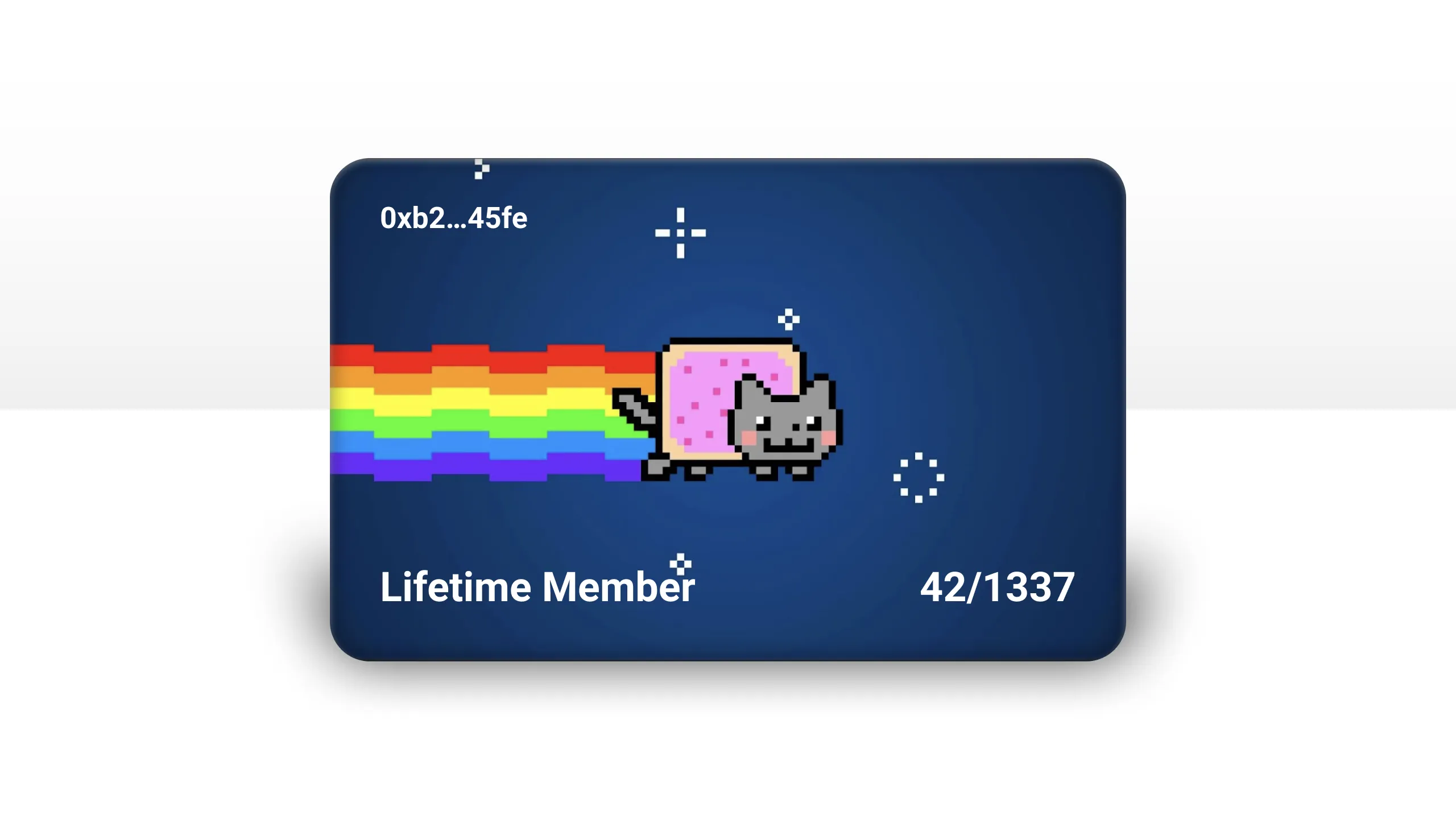
I’ve toyed around for a while with the idea that NFTs could one day transform the way we think about membership programs, subscriptions, and software licensing. My mind began heading down this path years ago as I drew on two different businesses of the past, along with the newly emerging technology of the blockchain to piece it all together.
Licensing
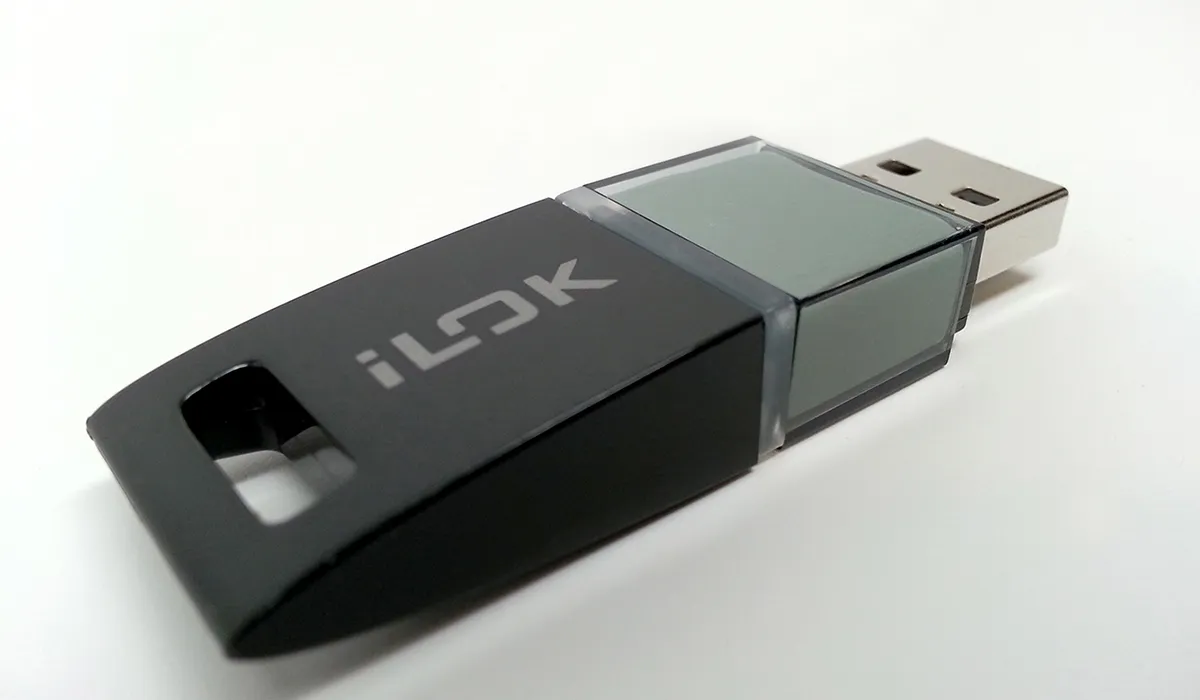
I spent a good chunk of my career working with media software like Final Cut Pro, Premiere Pro, and Pro Tools. The way that licensing worked in the past, particularly with Pro Tools, was that you’d have to have a license key attached to a USB dongle. AVID, the company behind Pro Tools, has a product called iLok, which acts as a hardware home for their software licenses. Without it attached to your machine, the software wouldn’t work. In the world of subscription software, this is a relic of the past, but the idea that there was a physical object that contained the license has always remained interesting.
Lifetime membership
TiVo also did something interesting. Besides paying for their service monthly, there was also the option of paying for a “lifetime” membership. When I first got my TiVo, this set you back about $199 (later it ended up being $399), but it meant you’d never pay another monthly fee again. As time went on and they added new features and capabilities to the service, the value of the service (and therefore the “lifetime” option) went up. If you bought it early, you got a hell of a deal.
NFTs
Non-fungible tokens, while currently popularized with ERC-721, also have another standard under ERC-1155. In both cases, they represent scarce digital objects that are indivisible and stored in your wallet. One interesting thing about wallets is that the only person who owns the secret key to it is you. Another interesting thing is that any website or app can ask for your wallet to authenticate against it. Sign in with Ethereum, anyone?
Putting it all together
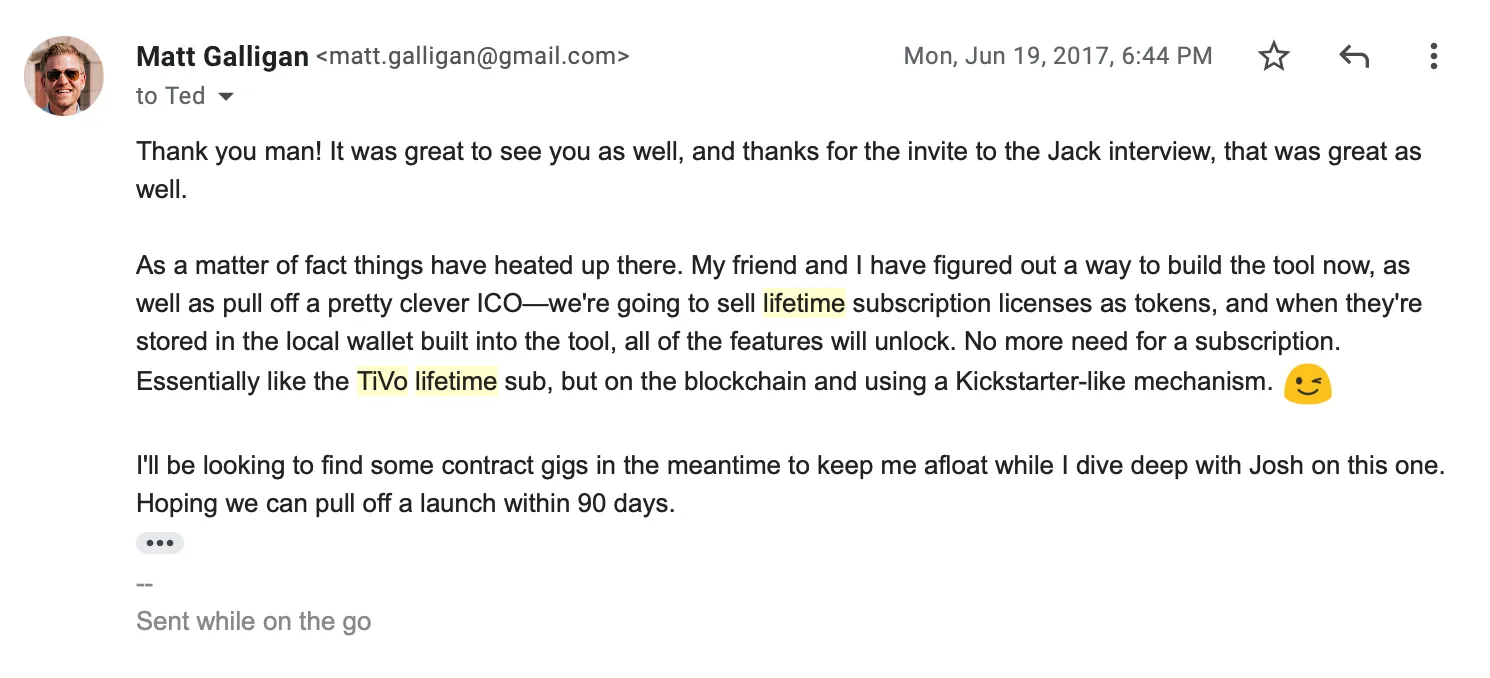
Imagine membership cards as NFTs themselves, where all of the above is mashed together. What kinds of things become possible?
- The tokens can be bought from a provider, or from other individuals
- The tokens live in your wallet and can be authenticated against to provide access to membership-based features
- The tokens are in effect lifetime memberships. They’re valuable, and people will want to collect them
- Supply of tokens can be managed, minting more over time or burning them to reduce supply
Some things that become interesting in this world:
Rewarding loyal members: What if you wanted to recognize your users/members without them having to pay for it directly? You could reward them with a token instead.
Fractionalization: What if people wanted to buy a fraction of these memberships? What if you want to split a season pass to a venue with someone else? While the token is non-fungible (can’t be divided), the bearer of the token can be traded amongst many people.
Exclusivity: Membership badges to groups can be seen by other users. Desirability in effect.
Liquidity: Because of the transparency behind minting of these tokens, users can understand their value floor. So memberships trade hands at multiples of their purchase price.
Value creation: Let’s say the author of a publication adds a new feature. The value of the membership just went up. Intrinsic value increases.
Coding behavioral carrots and sticks: Have clear terms of service that state that if you violate their policies, that they can burn your token. Terms of service become encoded into the actual token.
Conclusion
While we’re still very early in the NFT era, and what’s required for this to land with a mass consumer audience is orders of magnitude more sophisticated than what exists today, the non-fungible digital future seems inevitable.
I’d love to see some examples of people actually trying to do membership-based NFTs. And if you have any ideas on this, I’d love to hear them.